
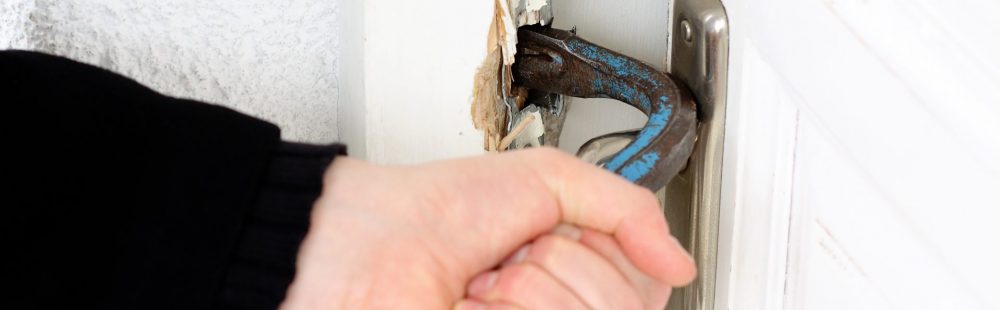
If you are found guilty (or plead guilty) to break and enter, depending upon the circumstances of the offence, and your previous criminal history, the Court may impose a heavy fine and imprisonment.



What is a break and enter offence?
In NSW, break and enter offences are principally dealt with under the Crimes Act 1900 (NSW). The particular charge, and the maximum penalty, will depend on what is alleged to have occurred.
A “serious indictable offence” means an indictable offence punishable by imprisonment for life or for a term of 5 years or more. In many break and enter matters, the alleged serious indictable offence is stealing, or intentionally or recklessly damaging property, but the law is not confined to those examples.
Break and enter with intent
Section 113 of the Crimes Act 1900 (NSW) concerns breaking and entering a dwelling-house or other building with intent to commit a serious indictable offence.
The maximum penalty is 10 years imprisonment. If the offence is committed in circumstances of aggravation, the maximum penalty is 14 years imprisonment. If the offence is committed in circumstances of special aggravation, the maximum penalty is 20 years imprisonment.
Break, enter and commit a serious indictable offence
Section 112 of the Crimes Act 1900 (NSW) concerns breaking and entering a dwelling-house or other building and committing a serious indictable offence.
The maximum penalty is 14 years imprisonment. If the offence is committed in circumstances of aggravation, the maximum penalty is 20 years imprisonment. If the offence is committed in circumstances of special aggravation, the maximum penalty is 25 years imprisonment.
Circumstances of aggravation and special aggravation
Circumstances of aggravation may include, among other things, being armed with an offensive weapon or instrument, being in company, using corporal violence, intentionally or recklessly inflicting actual bodily harm, depriving a person of liberty, or knowing that a person was present.
Circumstances of special aggravation may include intentionally wounding or inflicting grievous bodily harm, recklessly inflicting grievous bodily harm, or being armed with a dangerous weapon.
Will the matter be heard in the Local Court or District Court?
Some property-based break and enter offences may be dealt with in the Local Court, particularly where the alleged serious indictable offence involves stealing or intentionally or recklessly damaging property and the statutory value threshold is satisfied.
If the matter is dealt with in the Local Court, the Court’s sentencing powers are lower than those available to the District Court. For many Table 1 matters dealt with summarily, the maximum term of imprisonment available in the Local Court is generally 2 years.
Standard non-parole periods
For aggravated break, enter and commit under section 112(2), the standard non-parole period is 5 years. For specially aggravated break, enter and commit under section 112(3), the standard non-parole period is 7 years.
A standard non-parole period is not an automatic sentence. The sentence imposed will depend on the objective seriousness of the offending and the offender’s personal circumstances. Standard non-parole periods do not apply where the offence is dealt with summarily in the Local Court.
What penalties can the Court impose?
If you plead guilty or are found guilty of a break and enter offence, the sentence will depend on the charge, the seriousness of the offending, whether the matter is dealt with in the Local Court or District Court, your criminal history, your plea, and your prospects of rehabilitation.
Depending on the circumstances, sentencing options may include a section 10 dismissal, a Conditional Release Order, a fine, a Community Correction Order, an Intensive Correction Order, or full-time imprisonment. See our guide to penalties and sentencing options in NSW.
Is it an offence to possess break and enter implements (tools)?
Yes. It is an offence under section 114(1)(b) of the Crimes Act 1900 (NSW) to possess, without lawful excuse, a housebreaking or safebreaking implement, or an implement capable of being used to enter.
The maximum penalty on indictment is 7 years imprisonment. This offence is generally dealt with in the Local Court unless the prosecution elects to have the matter dealt with on indictment.
The prosecution must prove possession and the nature of the implement. If lawful excuse is raised, the accused bears the burden of establishing that excuse on the balance of probabilities.
Related Services
-
 Criminal Law
-
 Extortion and Blackmail
-
 Sex Crimes and Sexual Offences
-
 Corporate Crime
-
 Drug Driving Lawyers
-
 Centrelink Fraud
-
 Firearm Offences
-
 Hinder an Investigation
-
 AVOs Apprehended Violence Orders
-
 Affray and Public Violence
-
 Malicious Damage to Property
-
 Computer Offences and Cybercrime
-
 Murder and Manslaughter
-
 Assault
-
 Stalking and Intimidation
-
 Drug Offences
-
 Larceny and Stealing
-
 Penalty Notices
-
 Misappropriation of Assets and Funds
-
 Drink Driving Lawyers
-
 Perjury and False Accusations
-
 Bankruptcy Crime
-
 Tax Fraud
-
 Identity Crime
-
 Environmental Crime
-
 Money Laundering
-
 Fraud & Cyber Fraud
-
 Bribery
-
 Insider Trading
Helpful Links
If you are looking for further information on break and enter, we hope the following links will help.














 Liability limited by a scheme approved under Professional Standards Legislation