
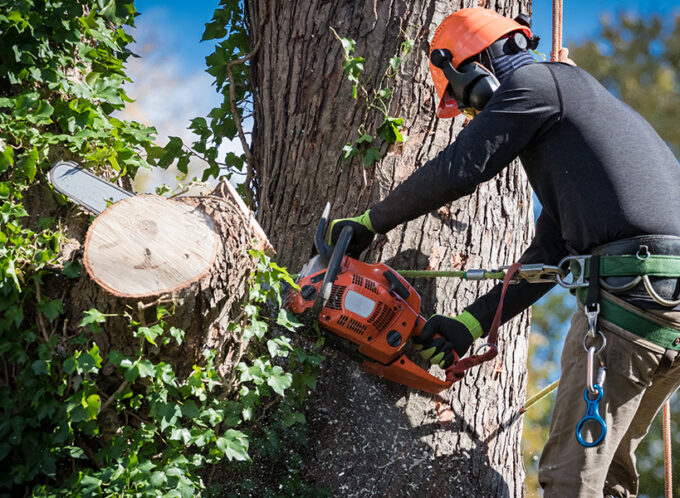
As urban areas expand and property development increases, and with the NSW Government projecting significant growth in regional housing supply over coming years, understanding tree removal laws is becoming more relevant to property owners. In NSW, there are a number of regulations that govern the removal of trees to ensure environmental sustainability and preserve the natural landscape. This article will explain the key aspects of NSW tree removal laws and set you up with the basic information you need to navigate this regulatory landscape responsibly.
Can I cut down trees on my property in NSW?
In NSW, property owners may manage trees on their land, however this is regulated by planning and environmental legislation, including the Environmental Planning and Assessment Act 1979 (NSW) (EP&A Act), State Environmental Planning Policies and local council planning instruments. Before you remove any trees, it is essential to understand the controls imposed by your local council under its Local Environmental Plan (LEP) and Development Control Plan (DCP), and whether any tree or vegetation protection provisions apply.
While some minor tree removal activities may be permitted as exempt development or complying development under State planning policies, major removals or those involving protected or significant vegetation typically require development consent. Additionally, certain areas may be subject to the “10/50 Vegetation Clearing Code of Practice” under the Rural Fires Act 1997 (NSW), allowing property owners in designated bushfire-prone areas to clear vegetation within specified distances of an existing dwelling for bushfire protection purposes.
Tree preservation controls and Local Environmental Plans
In NSW, tree and vegetation protection is primarily regulated through Local Environmental Plans and Development Control Plans, rather than a uniform State-wide Tree Preservation Order regime. Local councils may include provisions within their LEPs that prohibit the removal or pruning of certain trees or vegetation without consent, particularly where trees have ecological, heritage, landscape or amenity value.
Development Control Plans often provide further guidance on when consent is required, including thresholds based on tree height, trunk diameter, species or location, and may impose replacement planting or landscaping conditions. Before removing any trees, property owners should consult their local council’s LEP and DCP to ensure compliance with these requirements.
The 10/50 vegetation rule for removing trees in NSW
The 10/50 Vegetation Clearing Code of Practice, made under the Rural Fires Act 1997 (NSW), allows eligible property owners in mapped bushfire-prone areas to clear certain vegetation around an existing dwelling without seeking development consent. The rule generally permits the clearing of trees within 10 metres of a dwelling and other vegetation within 50 metres, subject to strict eligibility criteria.
The measurement is taken from the external walls of an approved, lawfully constructed dwelling, and may include attached structures such as permanent decks or garages. The Code does not apply to all land or all vegetation, and clearing is prohibited in certain environmentally sensitive areas or where otherwise excluded by the Code. Property owners must check the relevant NSW RFS mapping and Code requirements before relying on the 10/50 provisions.
Council fines for tree removal without approval
In NSW, unauthorised tree removal may constitute unlawful development under the Environmental Planning and Assessment Act 1979 (NSW) or a breach of vegetation protection provisions contained in a local LEP. Penalties for unlawful tree removal can be significant and vary depending on the nature of the offence, the planning instrument breached and the court in which proceedings are brought.
Courts may impose substantial fines, make restoration or remediation orders, and require the payment of costs. Serious breaches may be prosecuted in the Land and Environment Court of NSW, where higher penalties are available. These enforcement powers are intended to deter unlawful clearing and protect environmental values.
Applying for approval to remove a tree in NSW
The process for obtaining approval to remove a tree varies between councils. Depending on the circumstances, a property owner may need to apply for development consent, obtain a complying development certificate, or demonstrate that the works qualify as exempt development. Council websites generally provide information about applicable controls, application requirements, fees and whether an arborist’s report or replacement planting is required.
Navigating tree removal laws in NSW involves compliance with the Environmental Planning and Assessment Act 1979 (NSW), State Environmental Planning Policies, local council planning controls and, where applicable, the Biodiversity Conservation Act 2016 (NSW) and bushfire vegetation clearing provisions. Unauthorised removal can result in significant penalties and enforcement action.
A lawyer specialising in property and planning law can provide essential guidance in understanding applicable regulations, advising on approval pathways, preparing applications and representing property owners in regulatory or enforcement proceedings.
If you need legal advice on tree removal on your property, contact our property team at Turnbull Hill Lawyers.

Related Services

Categories
- A-Z of Family Law
- Uncategorized
- Personal law
- Business law
- Family Law
- Criminal law
- Employment
- Commercial litigation
- Conveyancing & property
- Debt recovery
- Wills & estates
- Contested wills & estates
- Claims
- Workers compensation
- Estate planning
- Elder law
- Business contracts
- Defamation
- Franchising
- Building & construction
- Motor vehicle accidents
- Firm news
- Videos









 Liability limited by a scheme approved under Professional Standards Legislation